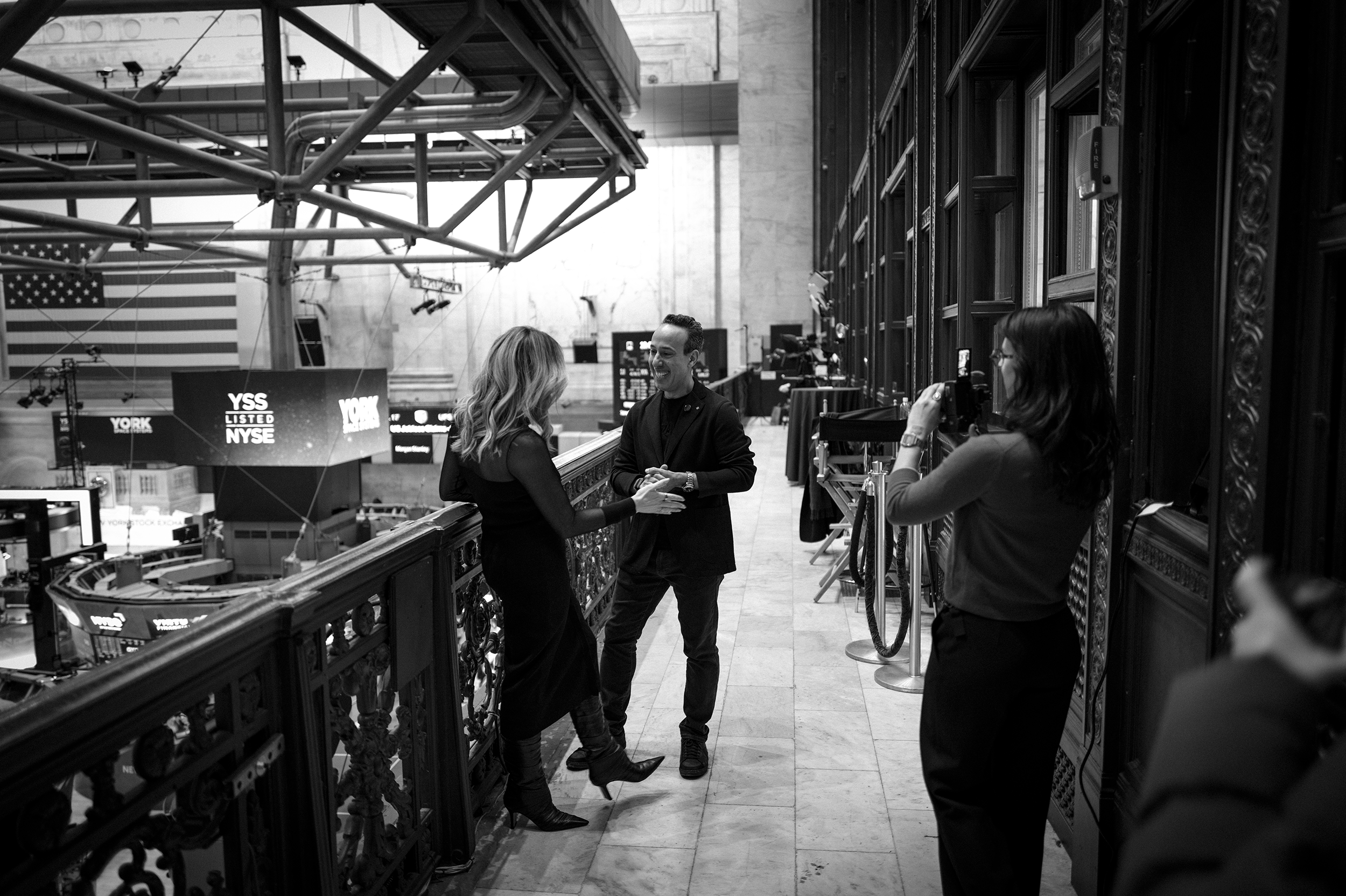
I recently had the opportunity to sit down with Gemma Allen at theCUBE studio inside the New York Stock Exchange to discuss where cybersecurity is headed, why we built 7AI, and why we raised the largest A round in cybersecurity history. The full interview is below:
I've spent my career in cybersecurity. I like to joke that I'm an expert in a very narrow field that wasn't cool for a long time and then suddenly became a big thing for everybody. After taking my previous company from an idea to a pre-IPO organization, we founded 7AI under a simple thesis: the bad guys are going to use AI to attack us. When that happens, our current technology stack won't hold up. You have to fight fire with fire.
We're at that inflection point right now.
Think about who we're up against. Attackers aren't kids in garages anymore. They're well-funded organizations, sometimes ransomware groups with significant resources, sometimes nation-states with billions of dollars behind their operations. When a technology as powerful as AI becomes available, they're going to be the first to use it. They're already building factories of agents that identify targets, weaponize tools, and execute attacks in coordinated swarms.
Defenders need that same capability.
Today's security operations centers process alerts the same way they have for decades. An alert comes in, a human analyst goes on a data quest to enrich and add context, does an investigation, decides if it poses a threat, and if yes, they respond. On a good day, that takes 30 minutes. Often it takes hours. And you're always constrained by how many people you have on shift.
Our AI agents do the same work in minutes. When alert volume grows, the system scales instantly. We can consume massive amounts of information in real time and make determinations that would be impossible for human teams operating at human speed.
But here's what I want to make clear: this isn't about replacing people. We call our approach PLAID, which stands for People-Led, AI-Driven. We think a lot about what we call "human work" versus "non-human work."
If a task is toil, repetitive, but necessary and maybe boring, there's probably an AI agent that can do that job. But if it requires strategy, creativity, and understanding the full picture, humans are exceptional at that. Our job is to shift people up, to elevate analysts from being in the loop to being on the loop as supervisors of AI.
One of our customers started with 25% of their alerts handled by 7AI. By year end, they'll be at 95%. The analysts who used to do that work manually are now supervising the AI and going on offense doing threat hunting and incident response. They tripled their team's capacity without adding headcount.
That's the future we're building toward. AI gives security teams superpowers. But trust is earned, not given. We partner with organizations to meet them where they are, customize everything to their environment, and take responsibility for outcomes. We call it a partnership, not a product.
We're on a mission to help defenders. The threats are only going to accelerate, and I believe the future is inevitable. Our job is to build the capabilities that give defenders the upper hand.